Post one video to every platform: how multi-platform native publishing works
- cross posting social media
- post one video to every platform
- multi-platform publishing
- native publishing
- post to multiple platforms at once
- social media distribution
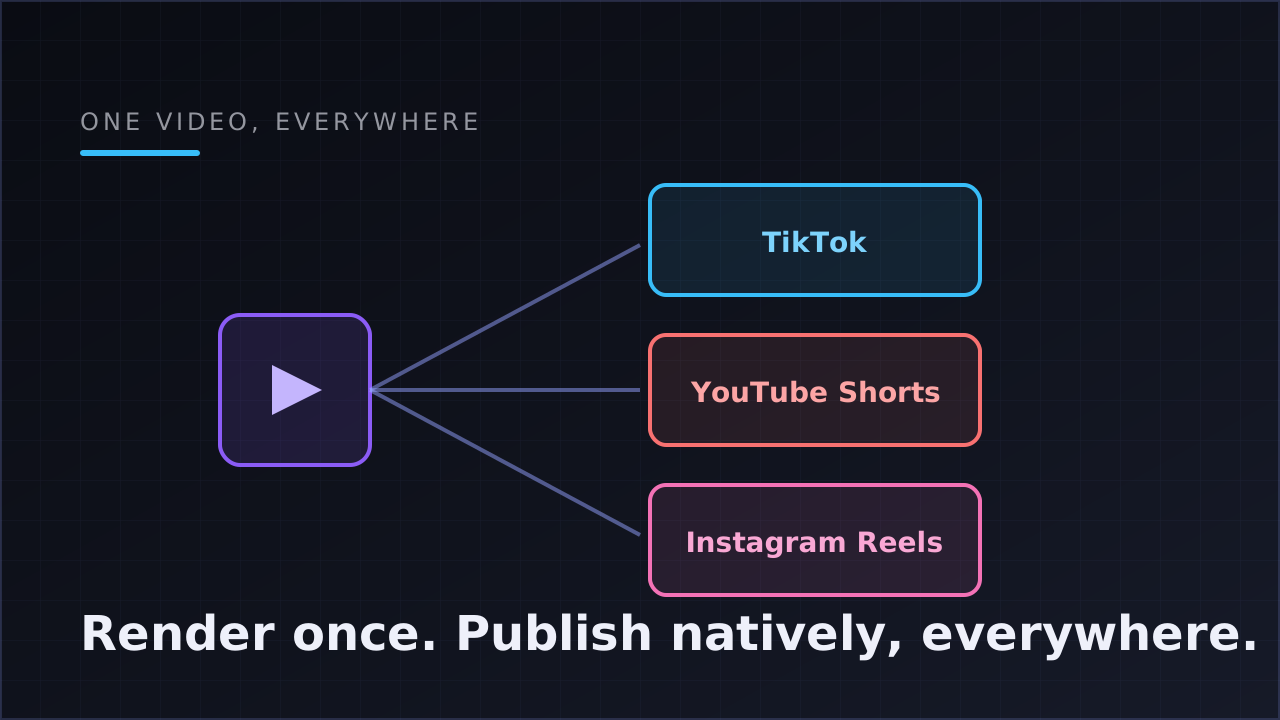
Posting one video to every platform works best through native multi-platform publishing: the same file uploads in parallel to TikTok, YouTube Shorts and Instagram Reels through each platform's official API, with a platform-appropriate caption per target and no watermarks. Each upload succeeds or fails independently — one platform's outage never blocks the others.
Production is the expensive part of short-form content; distribution is nearly free. Which makes multi-platform publishing the highest-leverage habit in the game — if it's done natively. This post covers the mechanics: what actually happens when one video fans out to several platforms, and the details that separate clean distribution from reach-killing shortcuts.
Cross-posting has a good version and a bad version
"Cross-posting" gets used for two very different practices, and conflating them is how the strategy got its mixed reputation.
The bad version: download your TikTok (watermark and all) and re-upload it to YouTube and Instagram. Platforms detect recycled, watermarked video and demote it — they say so openly in their creator guidance. You paid full production cost for one clean post and two handicapped ones.
The good version: the original file — no watermark, full quality — uploads natively to each platform through its official API, as if you'd posted it there by hand. Every platform receives a first-class post. Same production cost, three clean posts.
| Watermarked re-upload | Native multi-platform publish | |
|---|---|---|
| Source | Downloaded copy with platform watermark | Original rendered file |
| Upload path | Manual re-upload or repost bot | Each platform's official API via OAuth |
| Reach | Demoted as recycled content | Treated as a first-class post |
| Captions | Same text pasted everywhere | Platform-appropriate caption/title per target |
| Failures | You notice when you notice | Per-target status with reasons and retry |
| Account risk | Repost bots often violate terms | The sanctioned integration path |
If you take one thing from this post: the platform never punishes you for posting the same video elsewhere — it punishes the evidence that you did it lazily.
What "native" actually means per platform
Each platform runs its own upload machinery, and a proper multi-platform publish speaks to each one in its own dialect:
- TikTok — direct post through the Content Posting API: the video file, caption, privacy level, and the AI-generated-content disclosure flag where it applies.
- YouTube — a Shorts upload through the YouTube Data API: title, description, category, and the altered-content flag for synthetic media.
- Instagram — Reels (plus image posts and Stories) through the Graph API: clean master file, native caption.
- X — text and image posts through the X API v2; video posts to X aren't supported yet, so video runs fan out to the three video platforms while text and image formats can include X.
The metadata differences matter more than they look. A YouTube title is a searchable headline; a TikTok caption is conversational hook text; an Instagram caption sits somewhere between. A pipeline that writes platform-appropriate text per target — rather than pasting one string everywhere — is respecting how differently these surfaces work. (What each platform's algorithm rewards from the same file is its own topic: what TikTok, YouTube and Instagram each want from short-form.)
Parallel targets, independent fates
Here's the mechanical core of a well-built multi-platform publish, and it's worth understanding even if you never build one:
One post, three targets. Each target is its own publish attempt with its own lifecycle: pending → publishing → published or failed, with the platform's stated reason attached on failure. The post as a whole rolls up to completed, partially failed, or failed.
Why this architecture matters to you as an operator:
- No cascade failures. Instagram having a bad hour doesn't cost you your TikTok and YouTube posts.
- Readable failures. "Reconnect TikTok — token expired" is actionable. A silent drop is a mystery you discover days later in your analytics.
- Surgical retries. Retry the one failed target; the two successful posts are untouched.
- Idempotency. A retried publish can never double-post — the retry either completes the failed target or fails again with a reason.
This is exactly how Klipsy publishes: every video fans out to its connected accounts in parallel, each target succeeds or fails independently with a clear reason, and failed targets retry from the dashboard. It's also the standard you should demand from any tool — ask specifically "what happens when one platform fails?" and listen for whether the answer includes the other platforms.
The economics: distribution divides your costs
The math is short and worth internalizing. Your production cost per video is fixed — script, voice, visuals, captions, render. Publishing that finished file natively to three platforms adds essentially nothing. So:
Cost per published post = production cost ÷ number of platforms.
Three platforms cut your effective cost per post to a third. It's the cheapest growth lever available to a faceless operator, and it compounds with cadence: a daily template becomes ~90 platform-native posts a month from ~30 renders. (The full unit-economics breakdown lives in what AI faceless content actually costs.)
The same logic explains why multi-platform is the natural partner of automation. Manually posting one video three times a day is the kind of chore humans skip by week three; a publish stage that fans out automatically makes three-platform distribution the default rather than the aspiration. In the full pipeline — content automation workflows — this is stage six, wired between the scheduler and the analytics.
Should every video go to every platform?
Mostly yes, with judgment at the edges.
The case for defaulting to "everywhere": audiences barely overlap, each platform's recommendation system samples independently, and per-post analytics will tell you where a format lands best — you don't have to guess in advance. Publish everywhere, then read the per-platform numbers.
The edges where you'd narrow it: formats a platform can't take (text-only posts have no home on YouTube; video doesn't go to X yet), and formats that clearly belong to one platform's culture once your analytics say so. The decision should follow the data, not precede it — which is the whole argument of the create → publish → measure loop: collect views, likes, comments and shares per platform, and let the numbers reallocate your distribution.
Setting it up without creating a monster
The practical checklist for going multi-platform with one pipeline:
- Render once, at the common denominator. Vertical 1080×1920 MP4 is the format all three video platforms want.
- Connect each account via official OAuth — publish + analytics scopes only, tokens encrypted and revocable. (The safety details: is automating TikTok or YouTube against the rules?)
- Let the tool write per-platform metadata. Captions and titles should be generated per target, not pasted.
- Verify the failure story. Post something, disconnect one account mid-flow if you're curious, and see whether the tool tells you what happened per platform.
- Read analytics per platform. The same video will perform differently on each — that difference is strategy input, not noise.
FAQ
Is it bad to post the same video on TikTok, YouTube and Instagram?
No — platforms only penalize the sloppy version: re-uploads carrying another app's watermark. The same original file published natively to each platform is treated as a first-class post everywhere. Audiences overlap far less than creators assume.
What's the difference between cross-posting and native publishing?
Cross-posting describes the strategy (one piece of content, many platforms). Native publishing describes the mechanism: uploading the original file through each platform's official API rather than re-uploading downloaded copies. The strategy is sound; the mechanism decides whether it works.
Can I post one video to every platform at the same time?
Yes — a proper publish stage uploads to all connected platforms in parallel. Each target succeeds or fails independently, so simultaneous doesn't mean fragile: one platform's failure never blocks the rest, and failed targets retry individually.
Should captions be the same on every platform?
No. A YouTube title, a TikTok caption and an Instagram caption do different jobs. A good pipeline writes platform-appropriate text for each target automatically — one of the clearest tells separating real multi-platform publishing from paste-everywhere tools.
Which platforms support automated video publishing?
Via official APIs: TikTok (Content Posting API), YouTube Shorts (Data API) and Instagram Reels/Stories (Graph API). X supports automated text and image posts through its API v2, but not video uploads yet — so video runs target the three video platforms.