What TikTok, YouTube and Instagram each want from short-form video
- short-form video platforms
- tiktok vs youtube shorts vs reels
- platform algorithms
- algorithm ranking signals
- short-form strategy
- platforms
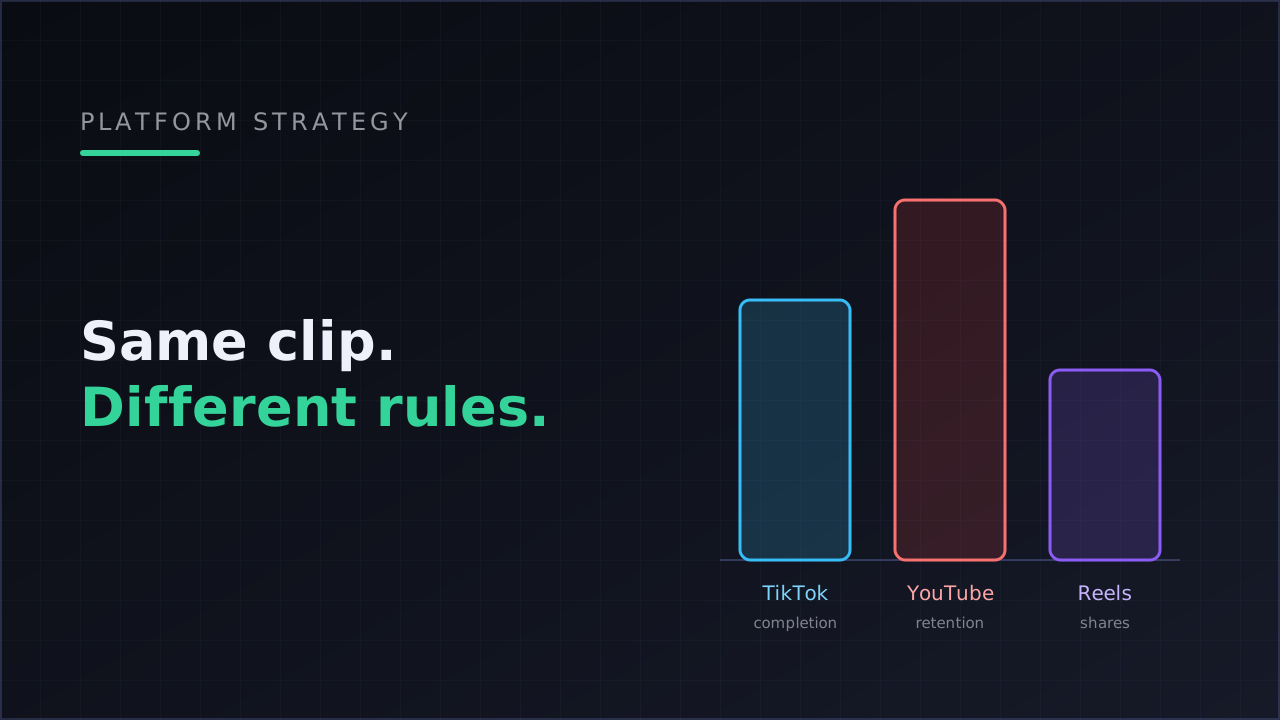
TikTok, YouTube Shorts and Instagram Reels all play vertical video, and all three will happily accept the same file — but they rank it against different signals, because each sits inside a different business. This post is about those signals: the one number each algorithm optimizes hardest, and what that means for how you cut the clip. (The separate question of how to get one file onto all three at once — parallel native uploads, per-platform captions, no watermarks — is its own mechanic, covered in post one video to every platform.)
TikTok: velocity and completion
TikTok's recommendation system is the most aggressive sampler of the three. A new post gets thrown at a small test audience within minutes, and how that audience behaves in the first hours decides whether the clip graduates to a larger one. The signals that carry the most weight arrive early: watch-through rate, rewatches, and whether people stayed past the opening seconds instead of swiping.
Completion is the master metric. A 12-second clip that 70% of viewers finish beats a 40-second clip that half of them abandon, because TikTok reads "finished" as "worth showing to more people." A rewatch counts even harder — it signals the clip earned a second look, which is why clean loops, where the last frame flows back into the first, outperform videos that trail off on a fade.
Practical consequences:
- The hook carries almost the entire video. Front-load the payoff or the tension into second one — a slow build gets sampled as a skip.
- Shorter, loopable cuts beat longer ones that sag in the middle.
- Native text, trending sounds and platform-side captions still get a measurable edge over burned-in everything, because TikTok can read them.
- Cadence compounds more here than anywhere. TikTok resamples active accounts constantly, so daily posting keeps the account in the test rotation.
YouTube Shorts: retention and the channel behind it
YouTube treats Shorts less as disposable feed items and more as an on-ramp to a channel. The algorithm still cares about retention — swipe-away rate is the killer metric, and a viewer who bails in the first two seconds hurts you more than a low view count ever will — but it also weighs subscriber conversion and what viewers do next inside YouTube.
That changes the brief. Shorts tolerate, even reward, a bit more substance: a 45–60 second explainer that holds retention beats a 15-second gag, because YouTube can route a satisfied viewer deeper into your catalog. Two things follow from that:
- Search matters. Shorts surface in YouTube search and suggested feeds, and YouTube is still the second-largest search engine on the web. Titles and the first caption line are ranking surfaces, so an evergreen Short with a clear, searchable title keeps collecting views for months after it's posted — long after a TikTok of the same clip has gone cold.
- The channel is the product. If long-form lives on the same channel, Shorts that reference or tease it convert best, because the subscriber gained from a Short is worth far more to YouTube than the single view.
So on Shorts you're optimizing two things at once: hold the viewer to the end, and give them a reason to stay on the channel after the swipe.
Instagram Reels: shares as the north star
Meta has said it plainly for two years running: sends per reach is the signal Reels optimizes hardest. Instagram is a social graph first, so a Reel that people DM to a friend outranks one they merely watch to completion. Watch time still counts, but the forward is the multiplier.
Design for the send. Relatable, "tag someone who," save-for-later content travels through DMs and group chats in a way a polished-but-passive clip does not — and saves are the second signal worth chasing, because a save is a private promise to come back. Two more Reels-specific realities:
- Polish counts more here than on TikTok. Reels sit next to a curated feed, so production quality reads as native rather than out of place.
- Recycled content is explicitly down-ranked. Meta demotes Reels that carry another platform's watermark or logo. Strip watermarks, post natively, and let Instagram generate its own captions — a TikTok export with the TikTok badge on it starts the race with a penalty.
The one signal each platform optimizes for
Same vertical file, three different scorecards. If you only remember one thing per platform, remember the column that matters:
| Platform | Primary signal | Secondary signal | What kills reach |
|---|---|---|---|
| TikTok | Completion rate + rewatches | Early-hours velocity | A weak first second |
| YouTube Shorts | Retention (low swipe-away) | Subscriber conversion, search titles | Bailing in the first two seconds |
| Instagram Reels | Sends per reach | Saves | Visible watermarks from another app |
The through-line: TikTok sells attention velocity, YouTube sells durable watch time, Instagram sells social connection. The video that wins on all three isn't three different productions — it's one clip cut so the hook lands fast (TikTok), the middle holds (Shorts), and the ending is worth forwarding (Reels).
Read each platform by its own number
The trap is comparing raw view counts across platforms. A TikTok with 40,000 views and a Reel with 4,000 aren't a win and a loss — they're two different games. Judge each surface by the signal it actually optimizes: completion on TikTok, retention and subscriber lift on Shorts, sends and saves on Reels. Which of those numbers to trust — and which vanity metrics to ignore — is worth its own read: the social media metrics that actually matter.
Doing that across three or four apps by hand is where most people quit, because each platform buries its real signal in a different place. Pulling completion, retention, sends and saves into one view — instead of tab-hopping between four dashboards — is the only way to tell whether a change to your cut actually moved the needle. That's the case for tracking every post in one dashboard.
Same file, three tunings
None of this requires three separate shoots. It requires one master cut and a handful of per-platform decisions that follow directly from the signals above — a loopable length for TikTok, a bit more room to breathe for Shorts, a share-prompting first line for Reels, and platform-native captions everywhere. The platforms drift a little every quarter, but the underlying incentives are stable. Tune to the incentive, not to last month's trick, and one pipeline serves all three.