Which content template actually wins? Comparing performance by template, not by post
- template performance
- content template comparison
- best performing template
- social media analytics
- template attribution
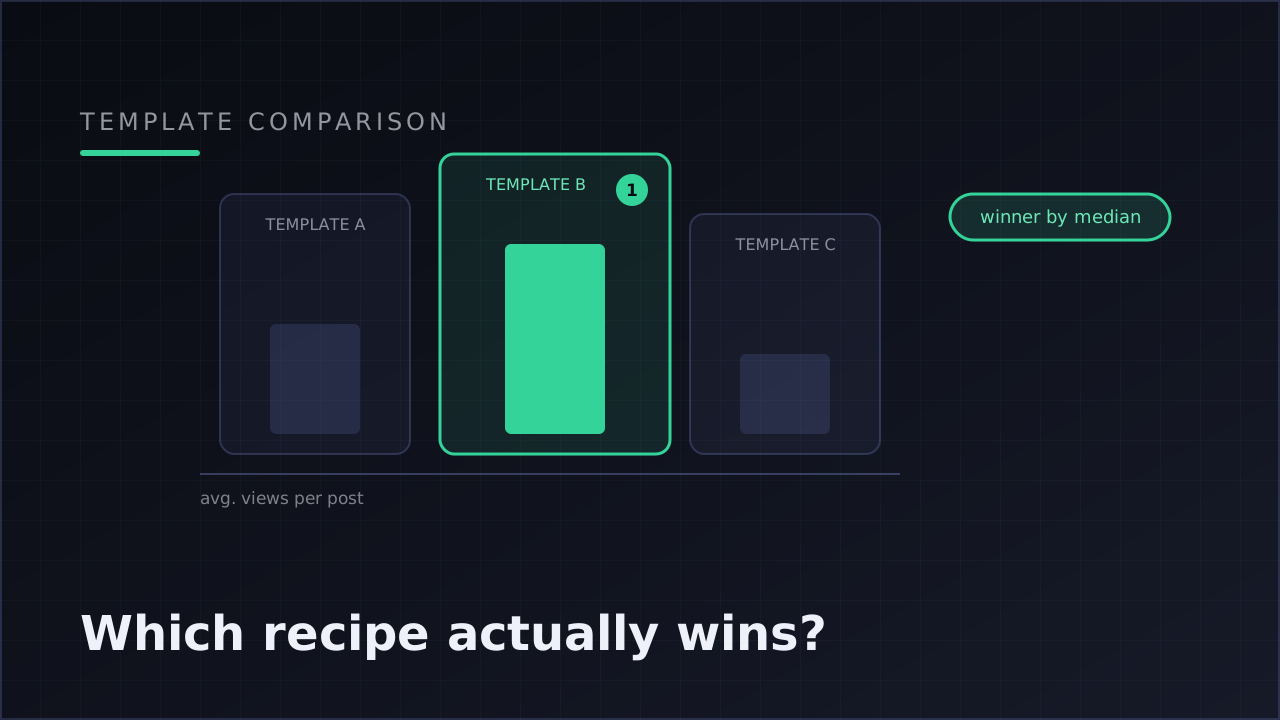
Every account running more than one content format eventually asks the same question: which one is actually working? The instinct is to look at the single best post and copy whatever it did. That instinct is almost always wrong — one great post is as likely to be a lucky roll as a repeatable pattern.
The comparison that actually answers the question isn't post versus post. It's template versus template.
Why single-post comparisons mislead
Short-form performance is noisy by nature. A strong format throws the occasional dud; a weak format throws the occasional viral outlier. If you judge a template by its best post, you're judging a poker player by one hand — the sample size is too small to separate skill from variance.
The fix is aggregation. When every post traces back to the template that generated it — a fixed recipe of format, voice, visuals and script style — you can compare twenty posts from template A against twenty posts from template B. That's a real sample, and it produces a real answer instead of an anecdote.
What "best" should actually mean
Total views rewards volume, not quality — a template posted forty times will out-total one posted ten times even if it performs worse per post. The comparison worth trusting is average (or median) views per post, which normalizes for how often each template ran.
Median specifically guards against the single-outlier problem: a template carried by one viral post looks great on average but poorly on median, which is the more honest read of what it does on a typical day.
| Comparison | What it tells you | What it gets wrong |
|---|---|---|
| Total views per template | Which template produced the most reach overall | Rewards volume, not quality |
| Average views per post | A normalized read of typical performance | Sensitive to one huge outlier |
| Median views per post | The most honest "what does this template usually do" | Needs enough posts per template to mean anything |
Klipsy's dashboard leads with a single best-template callout precisely because it's the comparison that changes behavior fastest — not a leaderboard of every template ever run, but the one signal worth acting on this week.
Turning the comparison into a decision
A ranked comparison is only useful if it produces an action. The pattern worth repeating weekly:
- Identify the leading template by average views per post, with enough posts behind it to trust the number.
- Scale it — increase its cadence, or point more scheduler capacity at it.
- Diagnose the laggard — is it the format, the platform it's aimed at, or the script prompt? Read a handful of its comments before deciding.
- Revise or retire it. A template that's consistently behind after a fair sample either gets a script/visual revision or gets turned off — don't let it keep consuming publishing slots on inertia.
This is the handoff at the center of the create → publish → measure loop: measurement doesn't just report on production, it decides what production does next.
A comparison needs a fair sample first
Template comparison breaks down with too few posts — three posts from a brand-new template against two hundred from an established one isn't a comparison, it's noise wearing a number. Give a new template enough of a run (a couple of weeks at normal cadence, minimum) before weighing it against templates that have been running for months.
It also breaks down across platforms that behave differently for the same content — the same template can rank first on one platform and mid-pack on another, since audiences and recommendation systems evaluate the same content independently. That's a separate, complementary comparison, covered in comparing posts across platforms.
FAQ
How do I know which content template is performing best?
Compare templates by average (or median) views per post, not total views — total views rewards how often a template ran, not how well it performed per post. Klipsy's dashboard surfaces this ranking automatically from your published posts.
How many posts does a template need before I trust the comparison?
There's no universal number, but single digits are too few to separate skill from variance. Give a template a real run — at minimum a couple of weeks at normal cadence — before ranking it against established templates.
Should I judge a template by its best post?
No — that's the single most common comparison mistake. One outstanding post can come from a weak template on a lucky day; one weak post can come from a strong template on an off day. Aggregate performance is the honest signal.
What should I do with a template that's clearly losing?
Diagnose before you kill it — check whether the issue is the format, the platform it's aimed at, or specific script/visual choices, using comments as qualitative signal. If it's still behind after a fair sample and a revision, retire it rather than letting it keep consuming publishing slots.
Does the best-performing template stay the same forever?
No — audiences, algorithms and your own content quality shift over time. Treat the ranking as a living signal to re-check weekly, not a decision you make once.